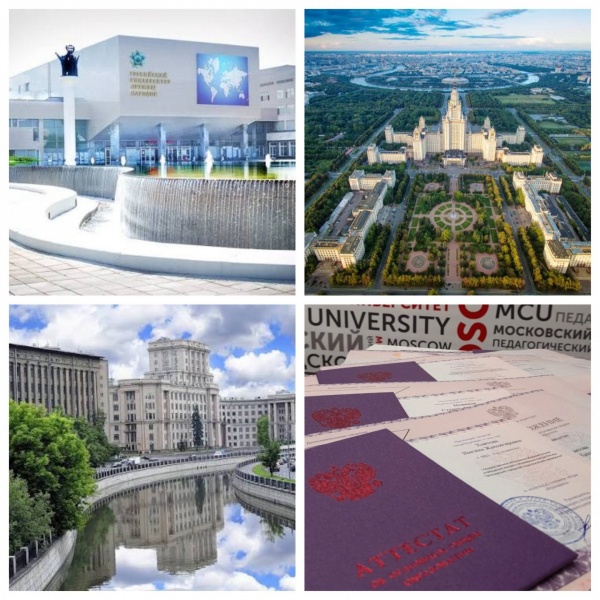
Education in Russia: Key Trends and Reforms by 2026
In Russia, education can be obtained both through educational institutions (schools, colleges, universities) and outside them — in the form of home or self-education. Parents have the right to choose a learning format for their child and even combine several formats, such as full-time and distance learning. Home schooling includes boarding, family-based, and distance education, which allows for flexible approaches to the learning process.
Structure of Education
Primary and Secondary Education in Russia: Structure and Current Changes
Structure of School Education
In Russia, school education is divided into three main levels:
• Primary General Education — grades 1–4.
• Basic General Education — grades 5–9.
• Secondary General Education — grades 10–11.
After grade 9, students can enter colleges or technical schools, while after grade 11 they proceed to universities.
Key Changes from 2026
Level of Education Main Changes from 2026
Primary (grades 1–4) - No homework for first graders.
- Reduced hours for native language studies.
- Introduction of unified programs for Russian language and literature.
- Adaptation period for first graders (September-October).
Basic (grades 5–9) - Increased number of history lessons with the addition of a module “History of Our Region.”
- Civics studied only in grade 9.
- New subject introduced: “Spiritual-Moral Culture of Russia” starting from grade 5.
- Unified textbooks for history, preparation of unified teaching aids for all subjects.
Secondary (grades 10–11) - New curricula introduced for literature, civics, physical education.
- Civics: two hours per week in grade 10, one hour in grade 11.
- Content changes in mathematics, history, geography.
Additional Innovations
1. Uniform Schedule: Recommended timetables have been introduced for all schools, mandatory “Conversations on Important Topics” every Monday, career guidance sessions every Thursday.
2. Behavior Grades: Experimental introduction of evaluation for social activity and discipline (grades 1–8).
3. Exams and Homework: Reduction in the number of exams, regulated time limits for completing homework by class level.
4. School Uniform Standard: Recommendations regarding style and materials were introduced but uniform is not compulsory.
5. Holidays: Minimum vacation periods and summer breaks are established.
Prospects
1. Introduction of state-unified textbooks across all subjects.
2. Possible reduction of the school curriculum (under expert discussion).
3. Strengthening control over educational quality and teacher qualifications.
Higher Education Reform
Starting from 2026, Russia will launch a large-scale reform of higher education:
1. Abolition of Bachelor's and Master’s Degrees: Instead, there will be an introduction of basic (4–6 years) and specialized (1–3 years) higher education systems.
2. Basic Education — analogous to bachelor's degrees but with more flexible duration.
3. Specialized Education — professional, managerial, and research tracks.
4. Postgraduate Studies become a separate level of education.
5. Graduates of basic programs will be able to enter master’s degree programs on state budget places.
New Admission Rules for Universities
In 2026, university admission campaigns will follow new rules. The Ministry of Science and Higher Education has already introduced changes affecting certain categories of applicants. These changes aim at increasing accessibility and transparency in admissions.
Implementation of Modern Technologies
Digital technologies and artificial intelligence are actively being implemented in schools and universities. The President of Russia emphasized the need to adapt education to meet economic demands and develop technological leadership in the country.
Table: Comparison of Old and New Higher Education Systems
Old System New System (from 2026)
Bachelor's Degree (4 years) Basic Education (4–6 years)
Master’s Degree (2 years) Specialized Education (1–3 years)
Postgraduate Studies Postgraduate Studies (separate level)
Key Takeaways
• Education becomes more flexible and individualized.
• Higher education is reformed to match modern economic and technological challenges.
• Digital technologies and AI are integrated into the system.
• University admission rules become clearer and more accessible for different groups of applicants.

1. Partner search – see the former partners’ list https://torussiawithease.ru/former-partners/
2. The special offers for Travel, Healthcare & Transport sectors. Please, contact us for details.
3. Publication in our edition:
Publication & Advertising (Budget-Friendly Options): Choose your own advertising duration and mix-and-match platforms:
- Placement Option, Price / Month, Flexible Benefits Included:
- Maximum (Home Page + Articles) - 50,000 RUB, run a banner in our business services section on the home page + get 2 PR articles published monthly in the business section.
- Focus (Articles Only): 25,000 RUB, case study or/and company review in our business section written by your or our editorial teams is included.
- Micro-Format (Trial Placement): 10,000 RUB, publish a short business card/listing in our business section.
Progressive Discount & Bonus System:
3 Months: 8% discount.
6 Months: 15% discount + 1 pinned article featured at the bottom of the business section for free.
12 Months: 30% discount + free quarterly content updates and refreshes.
4. We are also looking for a Strategic Sponsorship & Partnership; Custom Tailored: Conditions and sponsorship packages are built individually around "To Russia with ease" specific KPIs.
127276, Russia, Moscow, Marfino district, Bol'shaya Marfinskaya st., 4/7
Email info@torussiawithease.ru
Cell tel. +7 916 815 88 55 Telegram, MAX
Tel. +7 499 239 23 24
Working hours: Monday through Thursday 10 AM - 7 PM, Friday 10 AM - 5.45 PM