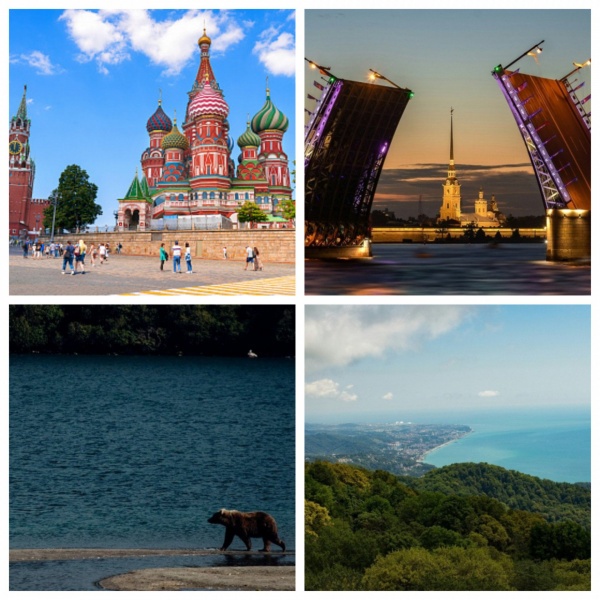
Russia, being the world's largest nation geographically, stretches across two continents—Europe and Asia—simultaneously. This expansive landmass makes it unique among countries globally. Its rich heritage encompasses not only significant contributions to history, but also profound influences on global culture, advancements in various fields of science, and remarkable works of art. These elements collectively contribute to making Russia one of the most influential nations worldwide.
The country's administrative center is Moscow, which serves as both the political hub and economic epicenter. Additionally, Russian stands out as the sole official language throughout the federation.
Geographically speaking, Russia boasts an immense variety of landscapes that span from the shores of the Baltic Sea in the west all the way eastward towards the Pacific Ocean. Within these broad boundaries lie dense woodlands, sweeping steppes, numerous majestic rivers like the Volga and Yenisei, along with countless freshwater bodies such as Lake Baikal—the deepest lake on Earth.
With over 140 million inhabitants, Russia ranks among the top ten most populous countries globally. Ethnically diverse communities coexist within this vast territory, contributing significantly to the nation's vibrant tapestry of customs and practices.
One notable aspect of Russian life is its traditional culinary offerings. Among them are iconic items such as blini (thin pancakes typically topped with sour cream or jam), hearty soups known as borscht made primarily using beets, savory filled pastries called pirozhki, and luxurious delicacies like caviar, predominantly derived from sturgeon fish found abundantly in local waters. Moreover, tea holds special significance here; it's regarded almost universally as the national beverage, frequently enjoyed alongside slices of lemon or fragrant herbal infusions.
Celebrations form another integral part of Russian identity. Some major festivities observed annually include New Year’s Eve, marked by lavish fireworks displays and family gatherings; Victory Day celebrated every May 9th commemorating victory against Nazi Germany during World War II; and finally, Christmas, traditionally held according to Orthodox Christian calendar dates.
In conclusion, while encompassing enormous physical dimensions and varied ecological regions, Russia remains steadfast in upholding deep-rooted cultural values and cherishing its illustrious legacy across multiple domains of human achievement.

1. Partner search – see the former partners’ list https://torussiawithease.ru/former-partners/
2. The special offers for Travel, Healthcare & Transport sectors. Please, contact us for details.
3. Publication in our edition:
Publication & Advertising (Budget-Friendly Options): Choose your own advertising duration and mix-and-match platforms:
- Placement Option, Price / Month, Flexible Benefits Included:
- Maximum (Home Page + Articles) - 50,000 RUB, run a banner in our business services section on the home page + get 2 PR articles published monthly in the business section.
- Focus (Articles Only): 25,000 RUB, case study or/and company review in our business section written by your or our editorial teams is included.
- Micro-Format (Trial Placement): 10,000 RUB, publish a short business card/listing in our business section.
Progressive Discount & Bonus System:
3 Months: 8% discount.
6 Months: 15% discount + 1 pinned article featured at the bottom of the business section for free.
12 Months: 30% discount + free quarterly content updates and refreshes.
4. We are also looking for a Strategic Sponsorship & Partnership; Custom Tailored: Conditions and sponsorship packages are built individually around "To Russia with ease" specific KPIs.
127276, Russia, Moscow, Marfino district, Bol'shaya Marfinskaya st., 4/7
Email info@torussiawithease.ru
Cell tel. +7 916 815 88 55 Telegram, MAX
Tel. +7 499 239 23 24
Working hours: Monday through Thursday 10 AM - 7 PM, Friday 10 AM - 5.45 PM