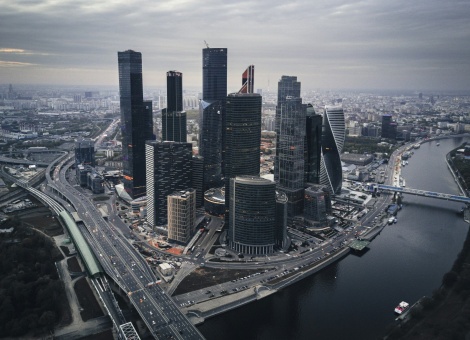
Doing Business in Russia for Foreigners: Key Rules and Nuances
________________________________________
Available forms of doing business
• Individual entrepreneur (IE)
o Who is it for : Ideal for small businesses (small shops, repairs, online services).
o Requirements : A permanent residence permit (VNZh) or temporary residence permit (TRP) is required . A VNZh permit allows you to work throughout Russia, while a TRP permit only allows you to work in the region where it was issued.
o ⚡ Important restriction: From February 5, 2025, foreigners included in the register of controlled persons (those staying in the Russian Federation without legal grounds) are prohibited from registering as individual entrepreneurs.
• Limited Liability Company (LLC)
o For whom : Suitable for working with corporate clients, participating in tenders, and scaling.
o Conditions: Minimum authorized capital - 10,000 rubles .
o Plus: You can register an LLC remotely through a representative with a notarized power of attorney.
• Branch or representative office of a foreign company
o What is the difference: A branch has the right to conduct commercial activities, while a representative office does not (only advertising, marketing, and searching for partners).
o Conditions : Accreditation procedure is mandatory for work.
• Purchase of a share in an existing Russian company.
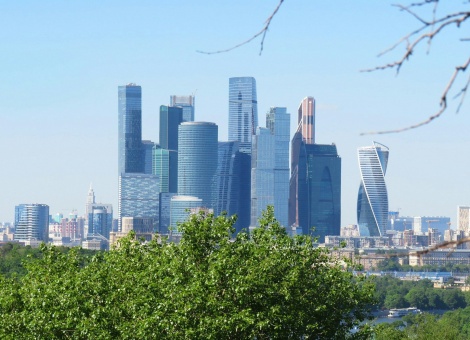
What do you need to register a business?
1. Package of documents and legalization
• For individuals: A copy of your passport with a notarized translation into Russian. If your passport does not indicate your date or place of birth, you will also need a birth certificate (also with a translation).
• For legal entities (foreign companies): Extract from the trade register of the country of registration with translation.
• Rules for document legalization:
o Translation only : For countries with which Russia has concluded a treaty on legal assistance.
o Apostille : For countries participating in the Hague Convention.
o Consular legalization: In all other cases (through the Russian consulate).
2. Appointment of the director
If a foreigner plans to become a company director, he or she will need a document authorizing work in the Russian Federation (temporary residence permit, residence permit, patent, or work permit).
• Exception: Citizens of the EAEU countries (Belarus, Kazakhstan, Armenia, Kyrgyzstan) do not require a work permit .
3. Bank account
After successfully registering a business, a bank account must be opened in a Russian bank for settlements with counterparties and tax payments.
________________________________________
Taxation: Residency Matters
The choice of tax regime directly depends on commercial indicators and your tax status (resident/non-resident).
• For non-resident individual entrepreneurs: The Simplified Tax System (STS) is often the optimal taxation system: 6% of income or 15% of "income minus expenses." However, please note: if you change your status to non-resident, the tax on certain types of income from activities in the Russian Federation may increase to 30% . The Patent Tax System (PSN) is not available to non-residents .
• For LLCs with foreign participation : If the share of a foreign company in the authorized capital exceeds 25% , such LLC does not have the right to apply the simplified tax system (STS).
• Dividends : When paying dividends to a non-resident foreign individual, the rate is 15% (instead of 13% for residents). A double taxation agreement (DTA) may reduce this rate.
________________________________________
Restrictions and Prohibitions
Foreign citizens and companies with foreign participation are prohibited or significantly restricted from conducting business in the following areas:
• Production of weapons and military equipment;
• Mining;
• Creation of media and publishing activities;
• Security and detective activities;
• Working with radioactive waste;
• Lease and purchase of land near ports and state borders;
• Telecommunications.
⚠️ Important : If a company's founders include a representative of an unfriendly country , official permission from the Russian Government Commission may be required to open and run the business.
________________________________________
Additional checklists to get you started
1. Hiring: If you plan to hire other foreign nationals, research regional quotas and limits on foreign labor in advance.
2. Criminal Record Certificate: Required for certain types of activities (e.g. passenger transportation or working with children).
3. Remote Management : If you manage processes from abroad, be sure to engage a specialized lawyer and tax consultant to thoroughly review double taxation agreements.

1. Partner search – see the former partners’ list https://torussiawithease.ru/former-partners/
2. The special offers for Travel, Healthcare & Transport sectors. Please, contact us for details.
3. Publication in our edition:
Publication & Advertising (Budget-Friendly Options): Choose your own advertising duration and mix-and-match platforms:
- Placement Option, Price / Month, Flexible Benefits Included:
- Maximum (Home Page + Articles) - 50,000 RUB, run a banner in our business services section on the home page + get 2 PR articles published monthly in the business section.
- Focus (Articles Only): 25,000 RUB, case study or/and company review in our business section written by your or our editorial teams is included.
- Micro-Format (Trial Placement): 10,000 RUB, publish a short business card/listing in our business section.
Progressive Discount & Bonus System:
3 Months: 8% discount.
6 Months: 15% discount + 1 pinned article featured at the bottom of the business section for free.
12 Months: 30% discount + free quarterly content updates and refreshes.
4. We are also looking for a Strategic Sponsorship & Partnership; Custom Tailored: Conditions and sponsorship packages are built individually around "To Russia with ease" specific KPIs.
127276, Russia, Moscow, Marfino district, Bol'shaya Marfinskaya st., 4/7
Email info@torussiawithease.ru
Cell tel. +7 916 815 88 55 Telegram, MAX
Tel. +7 499 239 23 24
Working hours: Monday through Thursday 10 AM - 7 PM, Friday 10 AM - 5.45 PM